
Your Second Brain Started Watching Itself
Two weeks ago I wrote that what I'd built had stopped being a second brain and started being infrastructure. This week the infrastructure started watching itself.

English | Español
Last Tuesday I asked Claude to add a rule. Something small. The way I always do, mid-conversation, in passing, the way you'd tell a colleague "from now on let's just default to X."
Before I'd finished typing, the system flagged that I had a rule six weeks old that said the opposite. Not on the same surface. Not in the same words. Two rules, two folders, two months apart, in conflict.
I'd written both of them. I would have written a third. The system caught me before I did.
That's the small moment that made me write this post.
What's actually different now
The thing I built a few weeks ago was a memory: notes that connected, an AI that remembered who I was between sessions. The thing I wrote about two weeks ago had grown a cascade and a panel and a graph: it noticed what happened, filed what mattered, pushed back when I asked.
But all of that ran on me. I had to start the session. I had to ask the question. I had to remember to file the decision. The system would pick up if I did, and drop the thread if I didn't.
This week the system started showing me what changed without my asking.
Three things your second brain can now do
I pushed all of this to the free repo yesterday. If you installed earlier, run git pull. If you haven't installed, the one-line bootstrap still works.
It notices what you said but didn't file. A new script watches your recent Claude Code sessions for sentences that pattern-match as a rule, a decision, or a lesson, and that you said out loud but never filed via /journal or /decision. Phrases like "from now on," "let's switch to," "the lesson is," "I keep doing this." It drops them into your vault as drafts you can come back to. You go through them at the end of the week. Most of mine were things I'd told Claude four times across three sessions and somehow never written down.
It notices drift. A second script tracks every file edited five or more times in the last 30 days. Repeated edits are how documents quietly rot. A study from Microsoft this April tested 19 frontier models across 52 professional domains and found that even the best ones corrupted about 25 percent of content over twenty round-trip edits. The average across all models was 50 percent. The system runs the script weekly, lists the top candidates with reasons, and asks you to look at them. It does not delete anything. It just shows you what's at risk.
It notices contradictions. A third script reads every rule file in your vault and looks for "always X" against "never X" on shared nouns. When it finds a clash, it tells you which two files and which two lines. There is an opt-in mode that uses a small language model to catch contradictions phrased differently ("default to A" vs "we never do A" in different vocabulary). Both scripts ship with test examples so you can verify the logic on your own machine before pointing it at your real vault.
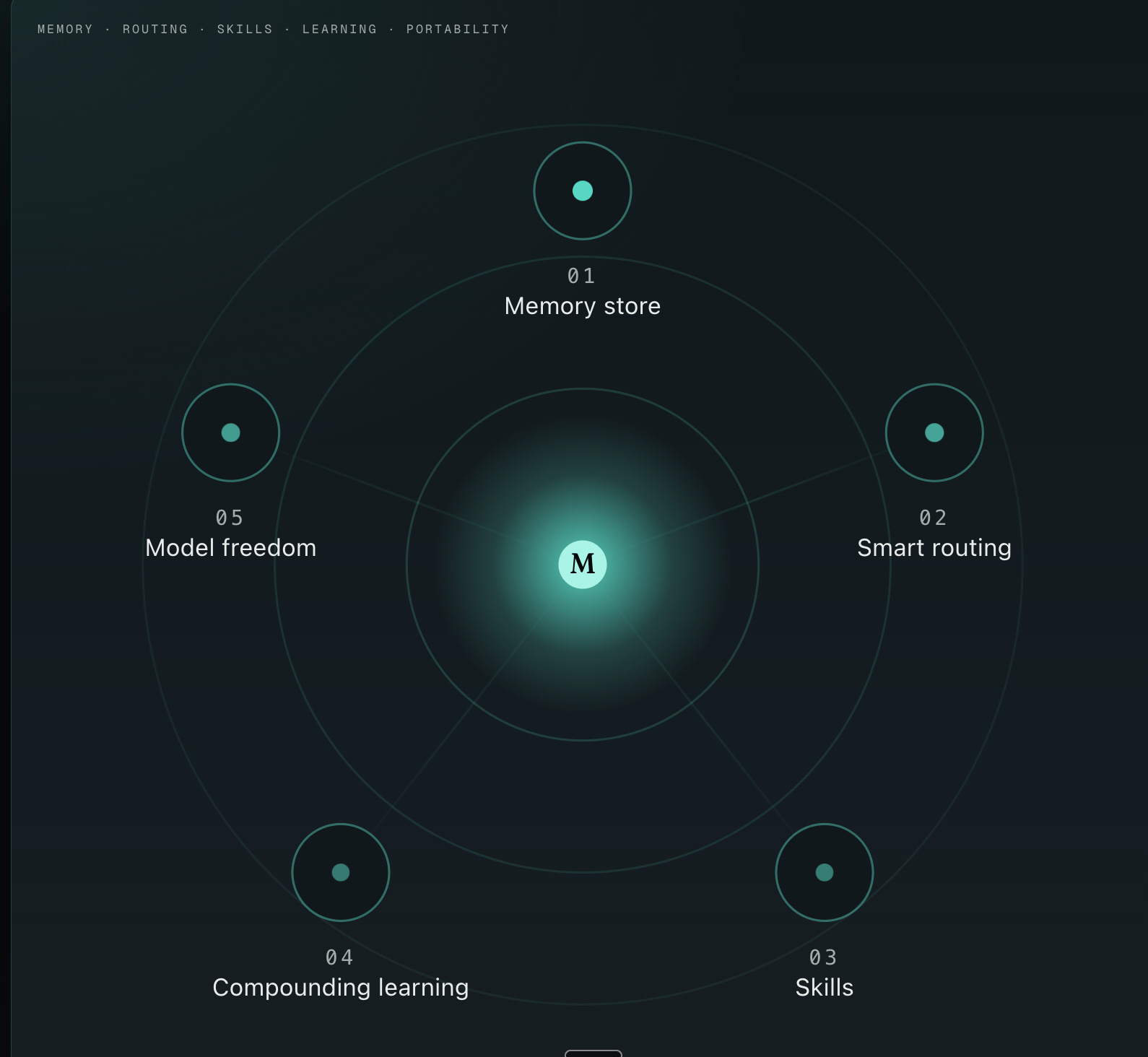
Underneath: the system learned to tell different kinds of notes apart
Same week, the system grew a vocabulary. Until now everything was just a note that linked to other notes. Now there's a quiet difference between a fact, a step-by-step how-to, and an exception you don't want to repeat. Each one carries a small "last verified" date so the system knows when something is going stale.
There are connectors that pull straight into the vault from the places work actually happens: Slack, GitHub, Notion, Linear, Gmail. There are two readers that watch resolved GitHub conversations and resolved Slack threads, and turn them into how-to documents, the way a careful teammate would write up "here's how we actually do this now."
And there's a small private service that lets other AI tools read from and write to the same memory, locked behind a key, in case you want to point them at it.
A weekly meta-pass
There's a /sunday-review skill now that runs all of the above as a single weekly pass. Detects drift. Catches conflicts. Surfaces passive captures. Reports back in plain language. Sundays the vault reviews itself and tells me what it found.
I read the report Monday morning over coffee. Most weeks it surfaces three things I would have missed. Some weeks it surfaces nothing, and that's also useful: it means the past week ran clean.
What this is now, and what it isn't
The first post was about a memory you talk to. The second was about infrastructure that fills itself. This one is about the moment where the infrastructure starts noticing its own seams.
The repo is open source. Everything I described above is in there. Free to install, free to run, free to make your own. If you want to look under the hood, the README, SECURITY.md, and the CHANGELOG are where I'd start.
What I'm noticing about this whole thing
When I started I wanted a system that remembered me. A few weeks later I wanted a system that worked without me. This week, for the first time, I have a system that lays out what shifted while I wasn't looking, ready for me Monday morning.
That feels like a different category of tool. Not a brain you query. Not infrastructure you maintain. Something closer to a colleague who does the boring part of being careful so you can do the interesting part of being alive.
Two weeks from now I expect to be writing about something I didn't see coming. That seems to be the cadence.
If you build something with it, send me what you built. I'd love to see.
Install: https://myceliumai.co/install
Already installed:
git pulland ask Claude to "update the ai-brain-starter skill."
I'm Adelaida. I write about consciousness and AI, and I help founders install their own second brain at diazroa.com. Building all of this from Bogotá.
