
Your First Week With Your Second Brain
Three commands and a habit. Here's the why for each.

English | Español
Here are the four things that actually make your ai-brain-starter useful. Three commands and a habit. If you do them in the first week, you'll feel what it's for by day eight. If you skip them, the brain sits in your Obsidian folder doing nothing.

1. Map your whole brain
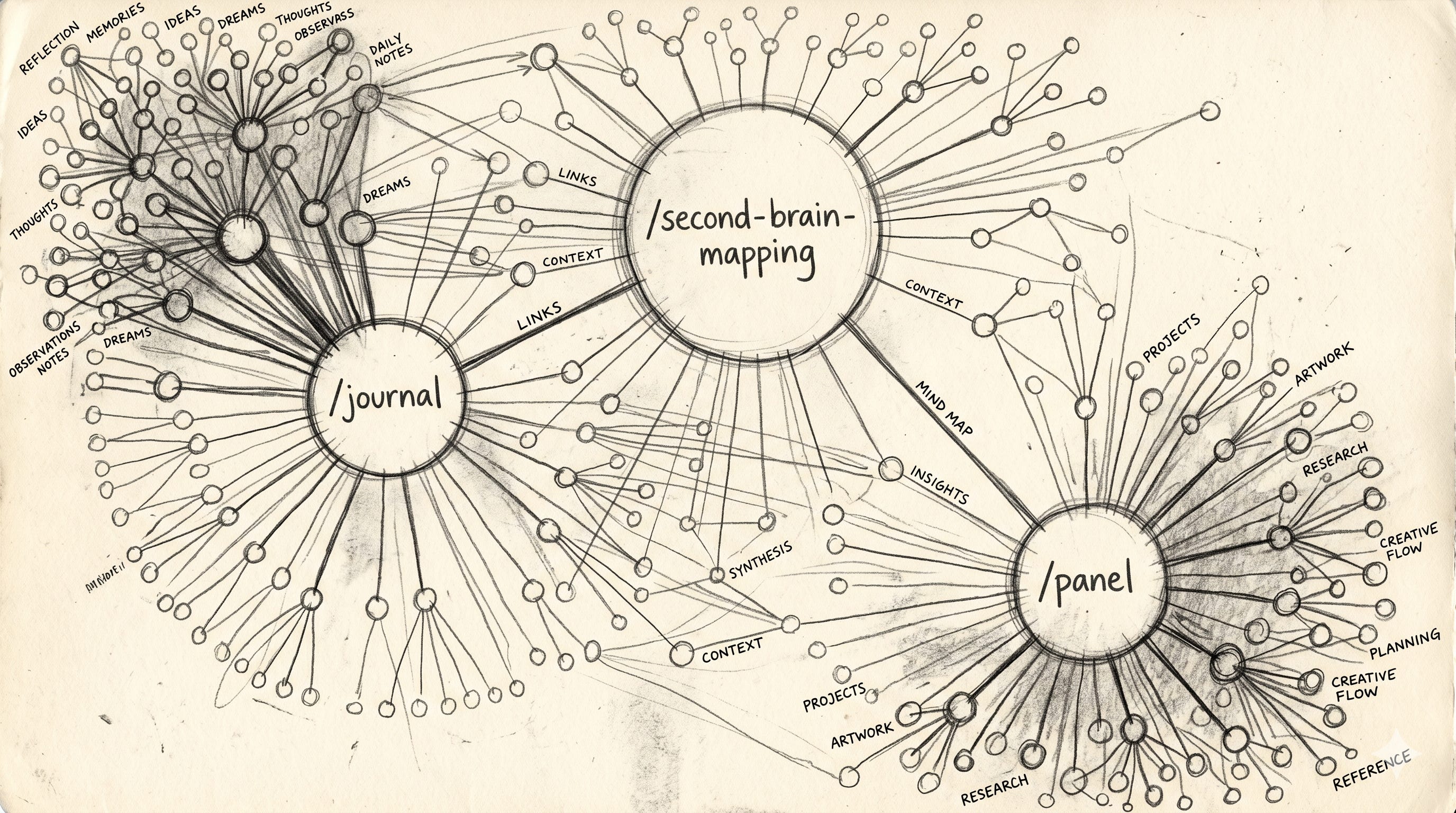
The first thing is to run /second-brain-mapping on every single file in your vault. All of it.
Your brain already has thousands of notes in it: journal entries from years ago, article clippings, book notes, half-finished ideas. Mapping reads every file and figures out what's connected to what. Names, concepts, people, places, decisions. It builds a map you can query.
Why it has to be everything: a partial map has blind spots. The magic happens when you ask a question today and the brain pulls a note from 2019 that answers it. That only works if 2019 got mapped. Skip files and you get blind spots in the places you forgot you had.
Run it in small batches
If your vault has a few thousand files, maybe ten thousand, don't feed it all in one go. It's like dumping a library on someone's desk: the AI either collapses or skims half of them. Small batches means one chunk at a time (~100 files), read properly, finished, then the next. You end up with every file mapped cleanly, not half-done with gaps. Bonus: if something breaks, you redo one small piece, not the whole thing.
The skill stages this for you. Your job is to be patient on the first big run. It takes time. It's worth it.
Optional advanced move: MiniMax
Tell your brain to use MiniMax for mapping. Cheaper model, does the boring work just as well, big savings on every mapping run. Setup means signing up for MiniMax and pasting an API key into your settings.
Why it matters: mapping your whole vault is a lot of reading. Using the smartest AI model for it is like hiring a Harvard professor to file papers. It works, but you're paying for brilliance you don't need.
The default model works fine if you skip this. You'll just pay more in tokens.
2. Journal every night
Second thing: journal every night. Run /journal before bed, or whenever your day ends for you. Write what happened, what mattered, what you're sitting with.
Why every night: your brain can only show you patterns if it has data to look at. One journal entry is a moment. Thirty is a picture of your month. A year of nightly entries is the most honest record of your life you will ever have.
The real payoff is weekly and monthly insights. When you run /weekly or /monthly, the brain reads your recent entries and shows you what's been firing: what's been on your mind, what's been repeating, what's shifting. You can't see your own patterns from inside. Someone, or something, reading them back to you is the only way.
If you skip nights, the pattern has holes. Missing a day is fine. Missing a week means the weekly insight misses most of the week. This is the habit that compounds
3. Ask the panel
The third is a mindset, not a command. Before you take an AI answer and run with it, especially for something strategic, ask: what would the panel think?
The repo comes with an advisory panel, a list of named voices (founders, writers, critics, people with different lenses). When you ask the brain to run a panel on a decision, it brings in three to five of them and makes sure at least one dissents.
Why it matters: when you're excited about an idea, you can't see its blind spots. A good friend pokes holes before you spend money or time on something. The panel is five of those friends, on demand, with different specialties. Not everyone has five brilliant friends available at 2 AM.
Use it before any decision that costs money, time, or relationships. I've killed ideas I was in love with because one voice on the panel said something I couldn't unhear. That's the whole point.
That's it
Four things, mostly. Mapping, MiniMax (optional), nightly journaling, and the panel.
If you do the first three in your first week, you'll feel what the brain is for by day eight. If you keep the habit, the weekly and monthly insights start to feel a little uncanny. And if you use the panel before big calls, you'll make fewer bad ones.
The install is the easy part. This is the actually-using-it part.
